

It is important to know the different perspectives about how to bake an artisan bread. One important aspect is to recognize between a fermented bread and a yeasted bread.
Baking bread is a process where many reaction happen when we are baking an artisan bread. At the process, making bread involves mixing together flour, water, commercial yeast, and salt, letting the mixture rise, and baking the risen dough. During the rising period, the yeast gobbles up some carbohydrates in the flour and digest them via fermentation. The end products are alcohol and carbon dioxide. Consequently, the reaction adds flavor and volume to the dough. Now the question is a fermented bread is better that a yeasted bread.
The fermented bread does not spike blood sugar, and has more magnesium, zinc, iron and B12 in it. How it works is simple. The potential fix is opting for long fermented breads, or true sourdough breads, made via traditional bread baking methods, meaning they are fermented with a sourdough starter for at least 12 to 15 hours. A long fermentation breaks down gluten proteins into smaller fragments, and for some, this improves digestibility.
So should everyone switch to fermented bread? Long fermented breads also have a lower glycemic index, it can help for those with diabetes. I believe that baking with natural leaven is in synchronization with the nature and maintains the integrity and the nutrition of the cereal grains used in the process. This helps to increase and reinforce the absorption in our body of the nutrients in the cereals.
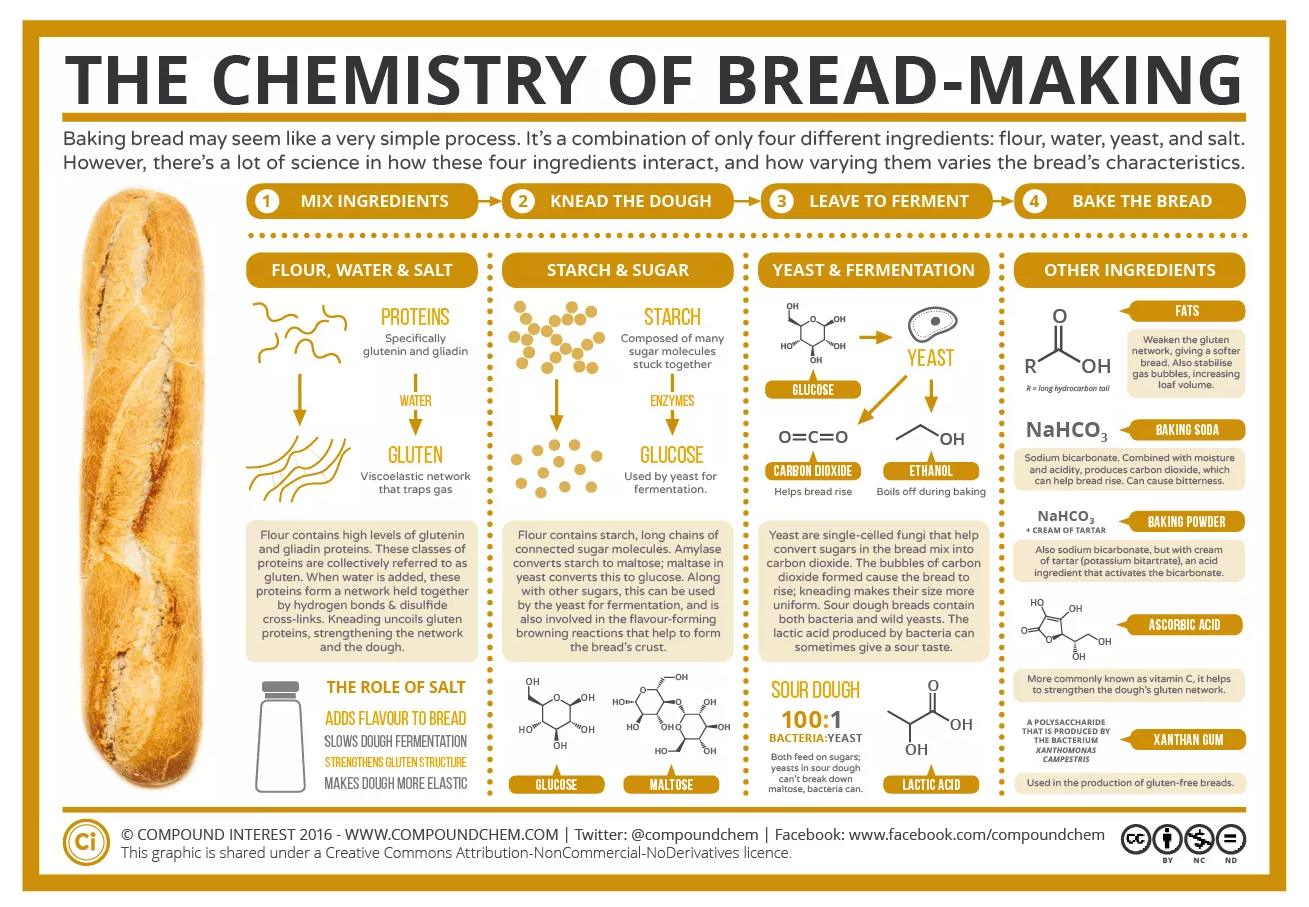
In contrast, the yeasted bread has numerous practical advantages. The fermentation is more regular, more rapid, and the bread rises better. But the fermentation becomes mainly an alcoholic fermentation and the acidification is greatly lessened. The bread is less digestible, less tasty and spoils more easily.
At the end, we should understand that It is important to recognize the basic differences between the fermented bread (sourdough) and the commercial yeast in most other breads. First sourdough yeast grows best in acidic dough, while the yeast does better in neutral alkaline dough yeast is a single type, with hundreds of strains and varieties, while sourdoughs are usually leavened by one or more types in the same dough, none of which is yeast. Yeasted bread from bakeries is a highly uniform product that produces an equally uniform texture in bread dough. But the most notable difference between the two methods of growth are that a single package of instant dried yeast produces just one batch of bread, while the same amount of wild sourdough in fermented bread produces as many loaves as we need it.
 LaBread Bakery